My new monograph Unheard Melodies: Apophatic Poetics and Literary Reading, is published by Fordham University Press. It’s slated to be published late this calendar year or at the very beginning of 2027.
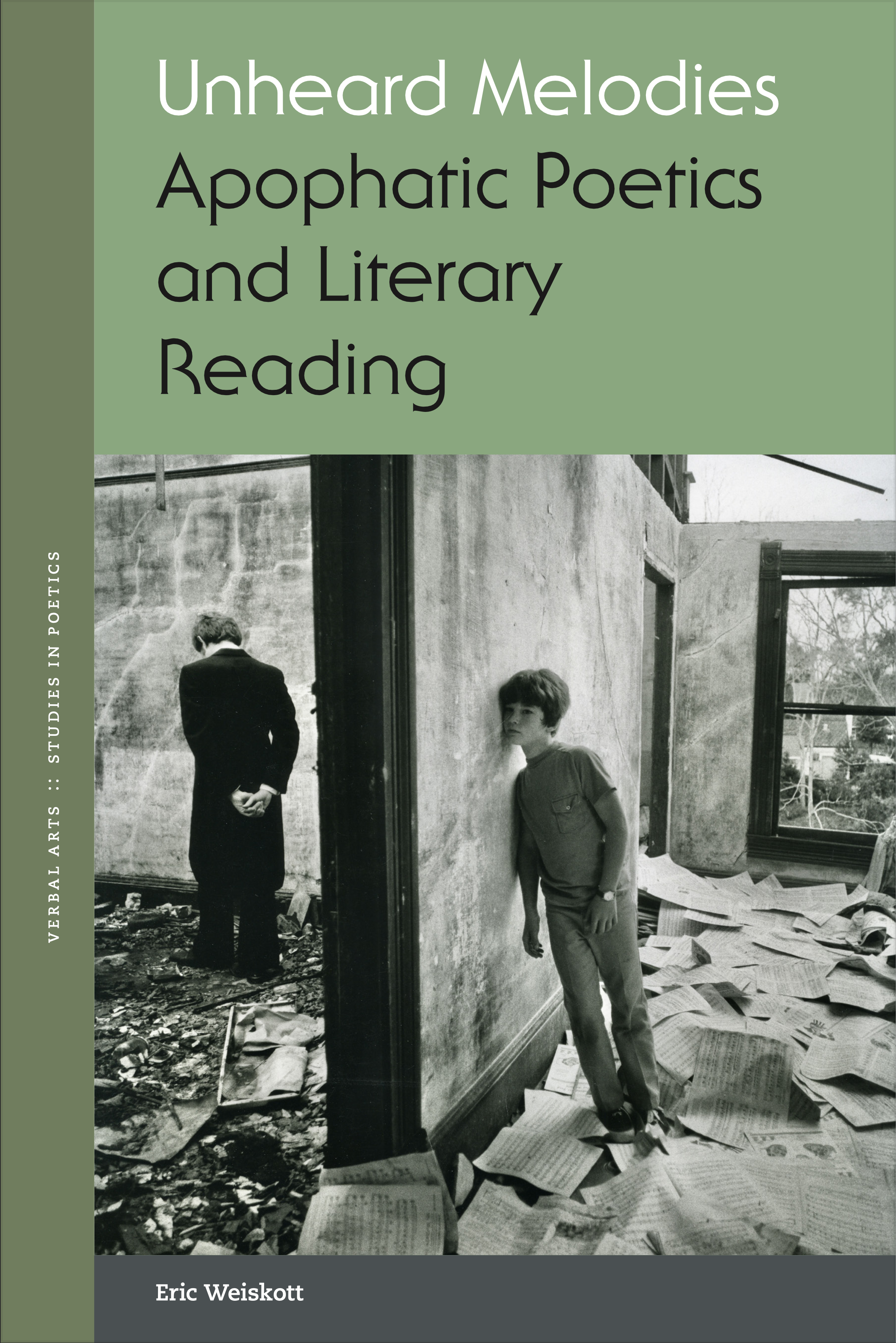
from the inside flap:
Unheard Melodies is an essay in comparative poetics. The book draws together readings of fourteenth- and twenty-first-century poetry, from Chaucer and Langland to Claudia Rankine and Ben Lerner, to reframe literary methodologies. Weiskott works through the tension between lineage and family resemblance, between mounting a literary-historical claim to connect old poetry to new and suspending claims of influence in order to draw out similarities in the practice of poetry writing across disparate times and places. The chapters show how premodern English verse, from Chaucer’s rhyming lyrics to the alliterative verse of the anonymous Sir Gawain and the Green Knight, supplies a forgotten prehistory for contemporary poetic styles.
Pivoting historically around John Keats’s translation of Christian theology into lyric poetry, Unheard Melodies concerns the paradoxical power of literature to represent what literature cannot represent: novels no one can read, lyrics no one can hear, syllables no one can pronounce, experiences no one can have, and more. In reading for these and other “apophatic effects,” Weiskott maps the spectrum of present absences possible in literature and song, including Nabokov’s novels and Bob Dylan’s music. Proposing theological negativity in the Christian tradition as both source and analogue of literary styles, the four parts of the book track apophatic poetics through four critical keywords: lyric, meter, close reading, and career.
 Eric Weiskott