Publication update! The promised paperback printing of my edition of William Langland’s Piers Plowman A is set to appear in September. It retails for $35.
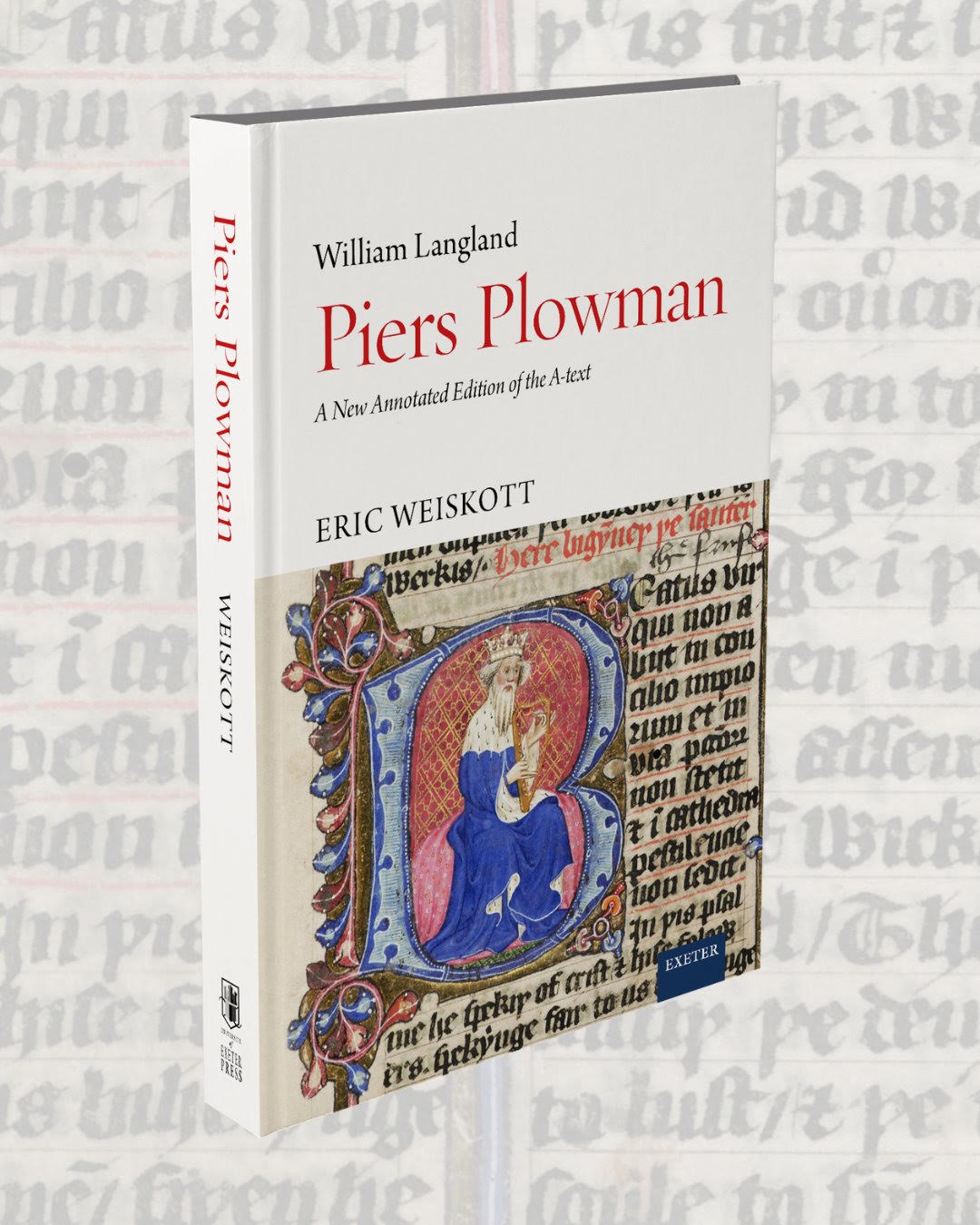
Publication update! The promised paperback printing of my edition of William Langland’s Piers Plowman A is set to appear in September. It retails for $35.
I have a review of Prageeta Sharma’s latest poetry book, Onement Won, up at Chicago Review online.
My new monograph, Unheard Melodies: Apophatic Poetics and Literary Reading, is published by Fordham University Press. It’s slated to be published late this calendar year or at the very beginning of 2027.
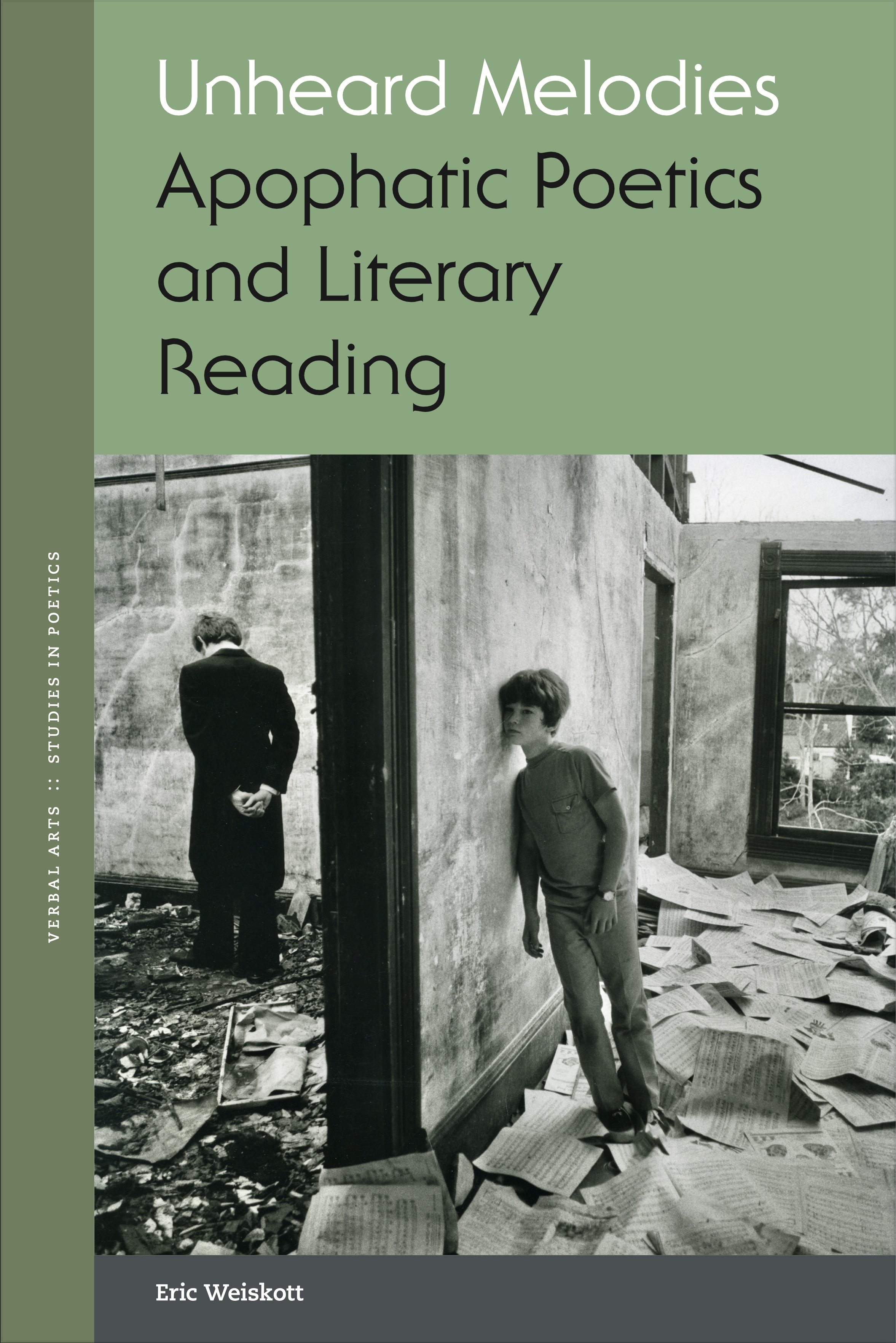
from the inside flap:
Unheard Melodies is an essay in comparative poetics. The book draws together readings of fourteenth- and twenty-first-century poetry, from Chaucer and Langland to Claudia Rankine and Ben Lerner, to reframe literary methodologies. Weiskott works through the tension between lineage and family resemblance, between mounting a literary-historical claim to connect old poetry to new and suspending claims of influence in order to draw out similarities in the practice of poetry writing across disparate times and places. The chapters show how premodern English verse, from Chaucer’s rhyming lyrics to the alliterative verse of the anonymous Sir Gawain and the Green Knight, supplies a forgotten prehistory for contemporary poetic styles.
Pivoting historically around John Keats’s translation of Christian theology into lyric poetry, Unheard Melodies concerns the paradoxical power of literature to represent what literature cannot represent: novels no one can read, lyrics no one can hear, syllables no one can pronounce, experiences no one can have, and more. In reading for these and other “apophatic effects,” Weiskott maps the spectrum of present absences possible in literature and song, including Nabokov’s novels and Bob Dylan’s music. Proposing theological negativity in the Christian tradition as both source and analogue of literary styles, the four parts of the book track apophatic poetics through four critical keywords: lyric, meter, close reading, and career.
Poet Matthew Weitman’s review of Cycle of Dreams with Eliot Weinberger’s The Life of Tu Fu appears over at Asymptote:
Rather than translate [Piers Plowman] line for line, word for word, phrase for phrase, insofar as this is ever possible, Weiskott translates exploitation for exploitation, vice for vice, and virtue for virtue. . . If not for the physical orientation of the book itself, it would be quite difficult to differentiate Weiskott from Langland. But. . .herein lies the great achievement of Cycle of Dreams. By combining his contemporary and domesticizing translation of the medieval poem with his own lyric poetry, Weiskott offers us his own vision: his own view of the world through the scrim of scholarship.
Eight years later, here we are again. I have been opening up space in my classes for students to reflect on the election result, which follows a uniquely tumultuous election cycle marked by vitriolic rhetoric from the Republican candidate: a rhetoric that asks us to despise and fear our neighbors. The Democrats, meanwhile, seemed short on pithy counter-narratives that can reach people where they live. The president-elect is a convicted felon. I want to believe this was not a normal election, where a normal range of disagreements about policy shaped the conversation. But, increasingly, extreme divisiveness and intractability is the norm in US politics.
It is hard to absorb. It is hard for my students to absorb; it is hard for me to absorb. I’m left with this thought, my most charitable interpretation of Donald Trump’s broad appeal. Beset by an increasingly unaffordable and unlivable world, one made all the worse by decades of heartless policy decisions, Americans are looking for a truly independent, truly free political figure. They aspire to cast their vote for someone who commands wealth and is not commanded by wealth in turn; someone who uses the party system and is not used by it in turn; someone who uses the media and is not used by the media in turn; someone free to say what is on their minds; someone who models a path to success that anyone (hypothetically) could follow, without the multiple layers of social gatekeeping of the established professions. (The importance of The Apprentice to Trump’s political rise can’t be overstated.) I can sympathize with and even own much of this desire. It is a sad commentary on the US in 2024—in particular, on the Democratic Party—that Trump, who uses his vast wealth and freedom only to aggrandize himself and to visit destruction upon others, is the only available approximate instance of the independent leader many would wish to see in our public life.
 Eric Weiskott
You must be logged in to post a comment.