alliterative verse / avant-garde

I have a new curated collection of poems, premodern and contemporary, up at Poetry Foundation. Come for the Anne Carson; stay for the Piers Plowman. This was a lot of fun to pull together. It is inspired by my current book project, which likewise juxtaposes premodern and avant-garde contemporary poetry, but there are many poems in the collection not discussed in the book (and vice versa).

From the introduction:

So many of the poems brought together here, premodern and contemporary, travel that circuit between paying rent and creating art: the demands of the aesthetic economy balanced uneasily against the demands of the economy-economy. The 20th- and 21st-century poems in this collection broach a transtemporal communication through which readers can receive “a modern letter sent from antiquity” (Willis, “Tiptoe Lightning”). Certain time-bending passages in St. Erkenwald and other alliterative poems anticipate the linkage, as if these distant poems were expecting us all along.

PhD pay

I have a new statistical article in Profession and a companion op-ed in Chronicle of Higher Ed reflecting research I conducted last year into English PhD stipends. I learned that many English PhD candidates make only $25,000 (the national median), or less. A cost-of-living adjustment makes many programs located in expensive cities and suburbs look less generous.

I thank the many Directors of Graduate Studies and other administrators and department leaders who shared information and discussed my report with me prior to publication.

Middle Carson

My current book project has a section or two on Anne Carson. Originally this was narrowly devoted to a close reading of The Beauty of the Husband (2001), which uses Keats to remediate the detritus of a fictitious marriage loosely based on Carson’s first. Keats is the presiding genius of my book. But Carson is addictive and all-consuming, so the Carson pages of the book have been metastasizing as I read more. There’s no one like her.

From “Essay on What I Think about Most”:

Hunger always feels
like a mistake.
Alkman makes us experience this mistake
with him
by an effective use of computational error.
For a poor Spartan poet with nothing

left in his cupboard
at the end of winter—
along comes spring
like an afterthought of the natural economy,
fourth in a series of three,
unbalancing his arithmetic

and enjambing his verse.
Alkman’s poem breaks off midway through an iambic metron
with no explanation
of where spring came from
or why numbers don’t help us
control reality better.

In order to curb my own completism and not pore over four decades of work in order to add two footnotes (I would do this. . .) I have needed to distinguish some tranche of Carson’s career that will be in play for me, given Carson is not one of the six authors my book is primarily about. I’ve come up with what I think of as Middle Carson, 1999-2010. The books of and about poetry in this period are Economy of the Unlost (1999), Men in the Off Hours (2000), The Beauty of the Husband, If Not, Winter (2002), Decreation (2005), and Nox (2010; written 2000).

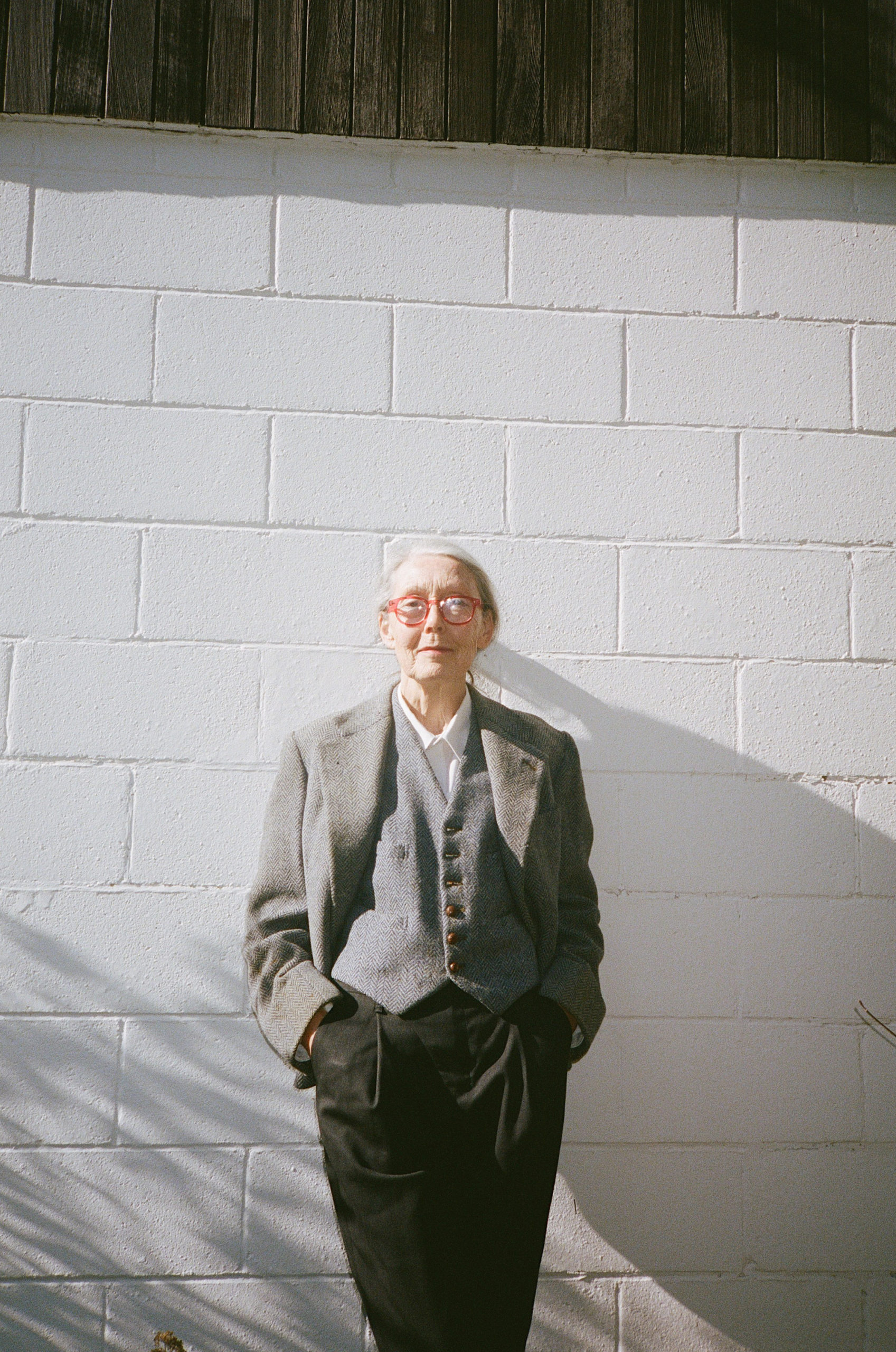
Anne Carson

Middle Carson was the period when her engagement with Sappho, Keats, and lyric peaked. It is the perigee in her eccentric orbit around these three objects of concern. Much of the rest of Carson’s career before 1999 and since 2010, both original work (whatever that means, given the way her texts play off the classics) and translations, is given over to Greek drama. I’ve excluded squarely dramatic works from the purview of my book as requiring a different approach and a different sensibility from my own. That’s no value judgment, just me knowing my limits. So until I write a whole book on Carson I’ll stop here.

Update December 2022: I did not stop there.

translation of Gower

I’ve been tinkering with a somewhat free translation of Gower’s short Latin poem Ecce patet tensus. I have an article forthcoming about the date and style of this poem. I argue that it is late in Gower’s career, c. 1400. Among Gower’s poems Ecce patet tensus has a certain mystique because it exists in just one manuscript copy, which is possibly incomplete, but it is copied in Gower’s own hand according to Sobecki.

The stanza shape is one that I’ve been gravitating toward for my original poetry. It accommodates the syntax of Gower’s elegiac couplets pretty well. I found I didn’t need punctuation: the line-breaks give sufficient guidance. (There isn’t much punctuation in medieval poetic manuscripts, either, for the same reason.)

Whence the Arrow Flies
by John Gower

see here blind Cupid’s bow lies taut

            and the flying arrow becomes the flame of love

                        love conquers all but wanders blind

            and misses the straight path

he leads his servants / blind lovers

            no one in love can see what is fitting

                        the heart’s eye blinded by the darkness of the flesh

            sinks and reason is unreasoned

love feeds on will which blind lust

            nourishes and provides with every delight

                        the world lies in the shadow beneath his wings

            and all obey his law

crowned love makes the low and the mighty

            equal by law of equality

                        love conquers all that nature creates

            but remains unconquered by all

he shackles and frees / binds and unbinds

            wounds every people but suffers no wound

                        there is no one left to overpower love

            there is no one left to agree terms with him

Samson’s strength / David’s sword—in these

            what is there to praise? or Solomon’s wit

                        oh humanity! which none can abolish

            nor absolve its sins

oh humanity! which inexorably turns

            toward the impossible compulsion

                        oh humanity! composed of two opposite thoughts

            irreconcilable

oh humanity! which finds permanent war

            between soul and body for inner authority

                        Cupid burns through lovers’

            hearts and subjugates them

whoever would restrain the flesh’s flame

            look out for the bow whence the arrow flies

                        no one can escape this innate disease

            unless grace finds a cure

Further reading

Sobecki, Sebastian. “‘Ecce patet tensus’: The Trentham Manuscript, In Praise of Peace, and John Gower’s Autograph Hand.” Speculum 90 (2015): 925-59.
phases and periods

I’ve thought quite a bit about what is entailed in breaking up history into periods. Mostly, I am against periodization, or at least against periodization as a comfortable shearing off of one era from the next. Too often a temporal boundary is simply the enabling condition of scholarly attention, dividing what is to be discussed from what is to be ignored. There is a politics to every gesture of exclusion. We know that life is not lived in self-contained periods, but we imagine for the sake of professional convenience that literary history was. It is important to balance an assessment of change with an assessment of continuity. It is important not to mistake a professional convenience for knowledge about the past.

Increasingly, I am asking the word phase to do some of the work that period used to do. It’s a subtle but significant difference. Whereas periods are marks of temporal punctuation, phases come and go unpredictably. “It’s just a phase.” Phases blend into one another. I like the dynamism of phase when, in the course of analysis, I need to designate some tranche of time. Try it!

Further reading

Weiskott, Eric. “Futures Past: Prophecy, Periodization, and Reinhart Koselleck.” New Literary History 52 (2021): 169-88.